
• Navigation überspringen
  • Zur Navigation
  • Zum Seitenende
Organisationsmenü öffnen Organisationsmenü schließen
Friedrich-Alexander-Universität Lehrstuhl für Chemische Reaktionstechnik CRT
  • FAUZur zentralen FAU Website
  1. Friedrich-Alexander-Universität
  2. Technische Fakultät
  3. Department Chemie- und Bioingenieurwesen
Suche öffnen
  • en
  • de
  • UnivIS
  • Mein Campus
  • StudOn
  1. Friedrich-Alexander-Universität
  2. Technische Fakultät
  3. Department Chemie- und Bioingenieurwesen
Friedrich-Alexander-Universität Lehrstuhl für Chemische Reaktionstechnik CRT
Menu Menu schließen
  • Über Uns
  • Personen
  • Lehre
  • Forschung
  1. Startseite
  2. Forschung
  3. Arbeitsgruppen
  4. Komplexe Katalysatorsysteme und kontinuierliche Verfahren
  5. Hybrid Materials (HyMat) for Catalysis and Purification
  6. SILP gas purification

SILP gas purification

Bereichsnavigation: Forschung
  • Arbeitsgruppen
    • Heterogene Katalyse
    • Komplexe Katalysatorsysteme und kontinuierliche Verfahren
      • Homogene Katalyse
      • Ionische Flüssigkeiten & Molten Salts
      • Performance und Synthese von Ionischen Flüssigkeiten
      • Wasserstoff und Energie
      • Hybrid Materials (HyMat) for Catalysis and Purification
        • Catalytic Recycling of Plastic Waste
        • Reaction monitoring
        • Reactor design
        • SCALMS catalysis
        • SCILL catalysis
        • SILP gas purification
        • SLP catalysis
    • Poröse und hierarchische Materialien
    • Supported Ionic Liquid Phase (SILP) Katalyse
  • Publikationen
  • Technische Ausstattung
  • Verbundprojekte

SILP gas purification

Prof. Dr. Marco Haumann

Prof. Dr. Marco Haumann

  • E-Mail: marco.haumann@fau.de

Overview

By applying thin films of ionic liquids onto silica or alumina support, the mass transport could be enhanced by orders of magnitude due to the large interfacial exchange area on the one hand and the small diffusion time in the thin film of ionic liquid on the other hand. The sulfur content of gas-condensate feed could be reduced below 10 ppm and the then loaded SILP catalyst was re-generated in vacuum. This loading-unloading procedure could be repeated several times without significant loss of performance, resulting in overall time-on-stream of 600 h. Ammonia and other hazardous gases could be irreversibly removed by this technology, making SILP absorbers a promising alternative for gas-mask filters, off-gas purification and CO2 capture technology.

Selected images
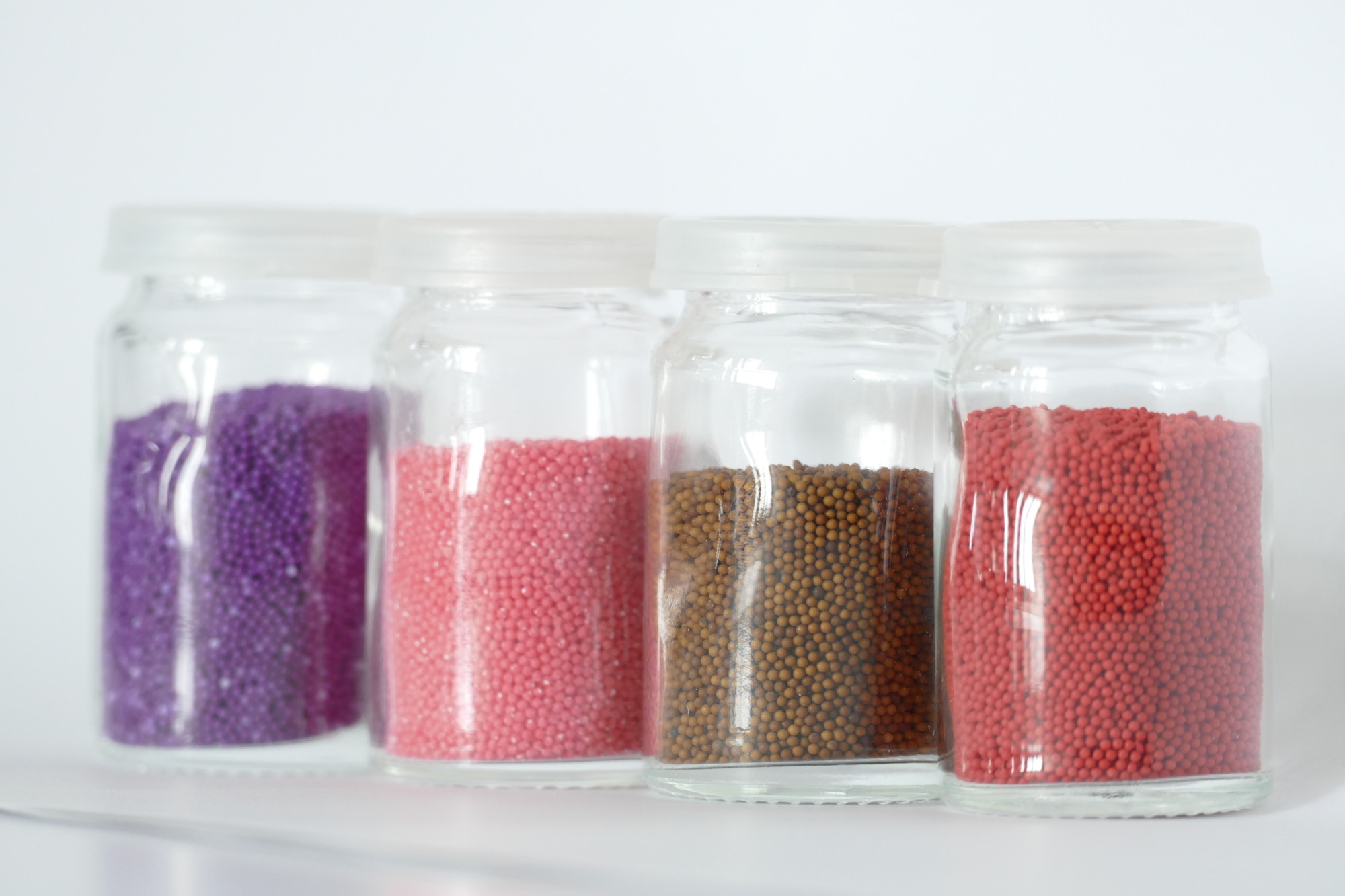
Supported ionic liquid phase catalysts developed at CRT

Selected publications

  • Kuhlmann E., Haumann M., Jess A., Seeberger A., Wasserscheid P.:
    Ionic Liquids in Refinery Desulfurization: Comparison between Biphasic and Supported Ionic Liquid Phase Suspension Processes
    In: Chemsuschem 2 (2009), S. 969--977
    ISSN: 1864-5631
    DOI: 10.1002/cssc.200900142
  • Kohler F., Roth D., Kuhlmann E., Wasserscheid P., Haumann M.:
    Continuous gas-phase desulfurisation using supported ionic liquid phase (SILP) materials
    In: Green Chemistry 12 (2010), S. 979
    ISSN: 1463-9262
    DOI: 10.1039/C004883f
  • Kohler F., Popp S., Klefer H., Eckle I., Schrage C., Böhringer B., Roth D., Haumann M., Wasserscheid P.:
    Supported ionic liquid phase (SILP) materials for removal of hazardous gas compounds - efficient and irreversible NH3 adsorption
    In: Green Chemistry 16 (2014), S. 3560-3568
    ISSN: 1463-9262
    DOI: 10.1039/c3gc42275e
  • Kaftan A., Klefer H., Haumann M., Laurin M., Wasserscheid P., Libuda J.:
    An operando DRIFTS-MS study of NH3 removal by supported ionic liquid phase (SILP) materials
    In: Separation and Purification Technology 174 (2017), S. 245-250
    ISSN: 1383-5866
    DOI: 10.1016/j.seppur.2016.10.017
Friedrich-Alexander-Universität
Erlangen-Nürnberg

Egerlandstr. 3
91058 Erlangen
  • Impressum
  • Datenschutz
  • Barrierefreiheit
  • Facebook
  • RSS Feed
  • Twitter
  • Xing
Nach oben