• Navigation überspringen
  • Zur Navigation
  • Zum Seitenende
Organisationsmenü öffnen Organisationsmenü schließen
Friedrich-Alexander-Universität Lehrstuhl für Chemische Reaktionstechnik CRT
  • FAUZur zentralen FAU Website
  1. Friedrich-Alexander-Universität
  2. Technische Fakultät
  3. Department Chemie- und Bioingenieurwesen
Suche öffnen
  • en
  • de
  • UnivIS
  • Mein Campus
  • StudOn
  1. Friedrich-Alexander-Universität
  2. Technische Fakultät
  3. Department Chemie- und Bioingenieurwesen
Friedrich-Alexander-Universität Lehrstuhl für Chemische Reaktionstechnik CRT
Menu Menu schließen
  • Über Uns
  • Personen
  • Lehre
  • Forschung
  1. Startseite
  2. Forschung
  3. Arbeitsgruppen
  4. Komplexe Katalysatorsysteme und kontinuierliche Verfahren
  5. Hybrid Materials (HyMat) for Catalysis and Purification

Hybrid Materials (HyMat) for Catalysis and Purification

Bereichsnavigation: Forschung
  • Arbeitsgruppen
    • Heterogene Katalyse
    • Komplexe Katalysatorsysteme und kontinuierliche Verfahren
      • Homogene Katalyse
      • Ionische Flüssigkeiten & Molten Salts
      • Performance und Synthese von Ionischen Flüssigkeiten
      • Wasserstoff und Energie
      • Hybrid Materials (HyMat) for Catalysis and Purification
        • Catalytic Recycling of Plastic Waste
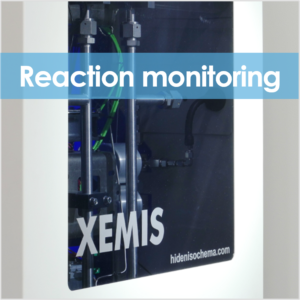
        • Reaction monitoring
        • Reactor design
        • SCALMS catalysis
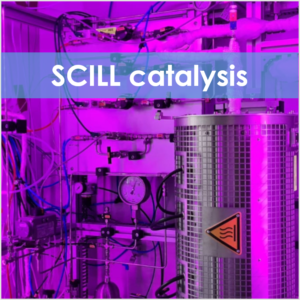
        • SCILL catalysis
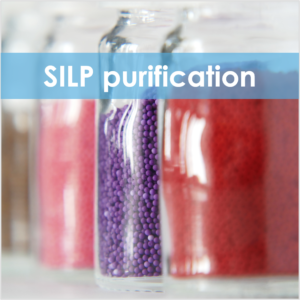
        • SILP gas purification
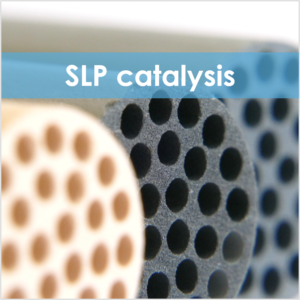
        • SLP catalysis
    • Poröse und hierarchische Materialien
    • Supported Ionic Liquid Phase (SILP) Katalyse
  • Publikationen
  • Technische Ausstattung
  • Verbundprojekte

Hybrid Materials (HyMat) for Catalysis and Purification

Prof. Dr. Marco Haumann

Prof. Dr. Marco Haumann

  • E-Mail: marco.haumann@fau.de

PhD students:
  • Arooj Ahmed, M. Sc.
  • Asem Al-Shaibani, M. Sc.
  • Kevin Bürner, M. Sc.
  • Phillipp Stangl, M. Sc.
  • Muhammad Aziz Ur Rehman, M. Sc.
  • Sharanya Nair, M.Sc.
  • Sharmin Khan Antara, M. Sc.
  • Yousuf Raed Ramzi, M. Sc.

Overview

The development of new materials for catalytic processes based on supported liquid films is a topic that bridges heterogeneous and homogeneous catalysis as well as biocatalysis and joins  applied chemistry with materials science and engineering.

Our target is to amalgamate the benefits of both homogeneous (high selectivity) and heterogeneous (easy recyclability) catalysis by developing hybrid materials for chemical conversion and gas purification processes. Such hybrid materials consist of supported liquids and depending on the nature of this liquid (organic, inorganic, ionic, metallic), we obtain different materials with strong benefits for certain applications.

We try to gain fundamental knowledge of the role of each building block (support, liquid, active site) by detailed kinetic, spectroscopic and theoretical studies. Based on this fundamental knowledge we optimize the material as well as the reactor design to achieve most sustainable processes possible.

Topics
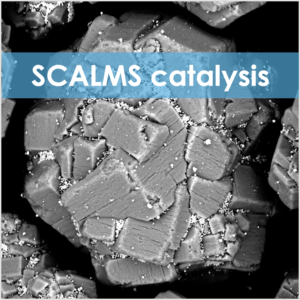
One field of application of such hybrid materials is large scale chemical synthesis, in which the higher selectivity or better recyclability of the catalyst is leading to more benign processes. Examples include hydroformylation, selective hydrogenation, and Friedel-Crafts alkylations. Another industrial sector for hybrid materials is the hydrogen economy, including selective hydrogenations and dehydrogenations.

The team
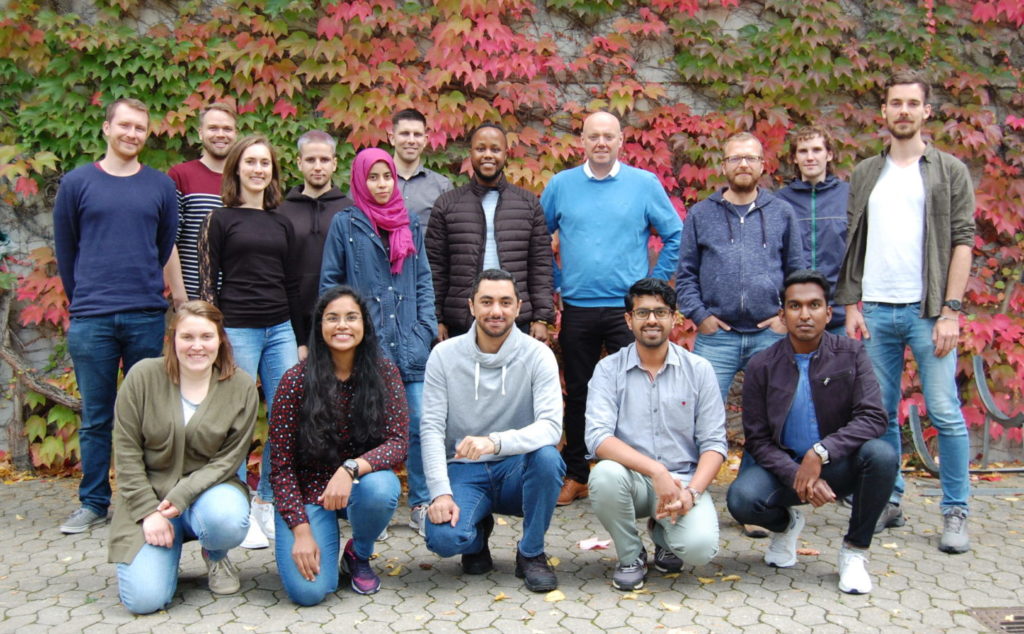
HyMat Team

Selected projects

  • ROMEO (Reactor optimisation by membrane enhanced operation) Project
  • MACBETH (Membranes and catalysts beyond economic and technological hurdles) Project
  • CLINT (Catalysis at Liquid Interfaces) Project
  • SCALMS ERC website
  • Catalytic Recycling of Plastic Waste
  • NFDI4Cat – NFDI for Catalysis-Related Sciences
Friedrich-Alexander-Universität
Erlangen-Nürnberg

Egerlandstr. 3
91058 Erlangen
  • Impressum
  • Datenschutz
  • Barrierefreiheit
  • Facebook
  • RSS Feed
  • Twitter
  • Xing
Nach oben